

With discovery of 5.9 MT in J&K, India surpasses China in lithium reserve
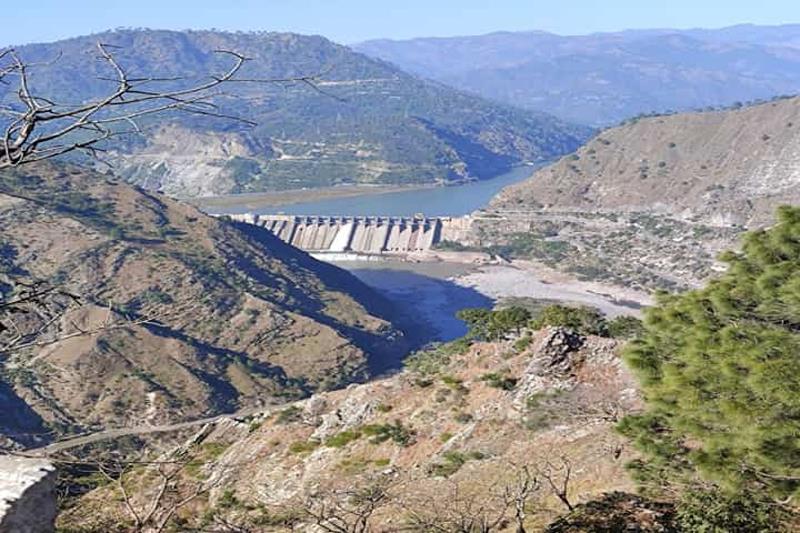
With the first discovery of lithium in the country—a 5.9 million tonne resource in Jammu and Kashmir’s Reasi district—India has surpassed China in possession of the precious metal reserves and taken over the 6th top position among all countries across the world.
While the United States of America (USA) retains the 4th position with a total resource base of 7.9 million tonnes, the discovery in Jammu has catapulted India to the 6th position and pushed China (5.10 million tonnes) down to the 7th rank.
The discovery of 5.90 million tonnes of G3 resource by the Geological Survey of India (GSI) in Salal-Haimana area in the Reasi district of Jammu, a short distance away from the revered and famous Mata Vaishno Devi cave-shrine in the Trikuta mountains, could be a veritable game-changer in the Union Territory’s economy which is enormously dependent on horticulture, handicrafts and the precarious tourism sector.
Officials believe the discovery of lithium could also have a potential impact on the UT’s political scenario and socio-economic profile as it would generate massive employment opportunities and boost trade and tourism in a big way.
According to the United States Geological Survey (USGS), the world in 2020 had a total discovered lithium resource of 86 million tonnes of which the total annual production was around 82,000 tonnes. In the US, Elon Musk’s EV car manufacturing company Tesla is one of the major importers of lithium.
Of the lithium resource base, Bolivia in 2020 topped with 21 million tonnes followed by Argentina (19.30 million tonnes), Chile (9.60 million tonnes), USA (7.90 million tonnes), Australia (6.40 million tonnes) and China (5.10 million tonnes). They were followed by DR Congo (3.00), Canada (2.90), Germany (2.70), Mexico (1.70), Czech Republic (1.30), Serbia (1.20), Peru (0.88), Zimbabwe (0.50), Brazil (0.47), Spain (0.30), Portugal (0.27), Ghana (0.09), Mali (0.07), Austria (0.05), Finland (0.05), Kazakhstan (0.05) and Namibia (0.05).
With annual production of 40,000 tonnes, Australia retained the distinction of being the largest producer in 2020, followed by Chile (18,000 tonnes) and China (14,000 tonnes). Argentina produced 6,200 tonnes, Zimbabwe 1,200 tonnes and Portugal 900 tonnes. The USA’s total home production was 870 tonnes.
Lithium is a non-ferrous metal and is one of the key components in rechargeable batteries for mobile phones, laptops, digital cameras and electric vehicles (EVs). It is also used in some non-rechargeable batteries for things like heart pacemakers, toys and clocks. Currently, India is import-dependent for lithium.
“This is for the first time that lithium reserves have been discovered in the country and that too in Jammu and Kashmir,” the Union Mines Secretary, Vivek Bharadwaj disclosed while speaking at the 62nd Central Geological Programming Board meeting at New Delhi on Thursday. Until recently, Bharadwaj himself was on deputation, positioned in the top echelons of the bureaucracy in Jammu and Kashmir.
Following a long innings of IAS in West Bengal and two stints in the Union Ministry of Home Affairs, Bharadwaj functioned as Financial Commissioner and Additional Chief Secretary of Health and Medical Education and Finance Department in 2021-22. In September 2022, he returned to the Central deputation where he was elevated and posted as Secretary Mines.
On the occasion, Bhardwaj handed over two Major Mineral Blocks Geological Reports of Lithium Blocks in Jammu Division and G3 Study (Advanced Study) of lithium, AI and titanium in the Jammu division, to J&K’s Mining Secretary Amit Sharma for initiating necessary follow-up action in the matter.
The Geology & Mining Department in Jammu and Kashmir is currently making preparations for e-auctioning of two major mineral blocks of limestone in the border districts of Rajouri and Poonch, contiguous to Reasi. Officials say that the process of finalising the availability of lithium and e-auctioning of the production in a time-bound manner had also been set into rolling.
According to Amit Sharma, all necessary steps would be taken in collaboration with the GSI and dedicated teams would work round-the-clock to ensure that this historical feat of e-auctioning the major mineral blocks takes place in a time-bound manner.
Sharma has the supervision of Bhardwaj who has functioned as Joint Secretary Ministry of Coal in Government of India from 2013 to 2017. Bharadwaj in West Bengal has also drafted Coal Mines (Special Provisions) Ordinance 2014, Coal Mines (Special Provisions) Amendment Rules 2015 and Coal Block Allocation Rules 2017.
“Lithium blocks which are a rare thing and a much demanded global manor mineral for electric batteries which is the future, shall be explored and e-auctioned so that J&K figures on the global map so far as availability of lithium reserves in the world are concerned,” Sharma asserted.
Lithium is a metal that is known for its low density, high energy-to-weight ratio and its ability to store large amounts of energy. It is also the lightest of all metals in the periodic table of elements, and its soft, silvery-coloured metal is widely used for its heat-resistant properties.
Though it is one of the oldest elements to have been around, lithium is not in abundance on Earth like its gaseous counterparts. The metal makes up just 0.002 percent of the Earth’s crust, though arguably, that is higher than the supplies of tin, silver, gold and platinum combined. Lithium doesn’t ever occur naturally in its metallic form as it is highly reactive to the elements and minerals around it. It is found in a crystalline form alongside rocks and other mineral deposits in the Earth’s crust.
Currently the main use for lithium is in batteries. Because of its high energy storage properties, lithium batteries can power small devices for long periods of time without overheating — things like watches, cell phones, laptops, tablets, remotes and more all use lithium batteries to keep them going for days, weeks or years at a time.
More recently, lithium has been a central player in the development and production of renewable energy technology.
Its ability to store energy has been crucial in capturing and storing energy created through wind, solar and hydro power, and many pieces of machinery or technology have lithium batteries to maintain and distribute that energy long after the source has stopped producing energy. Solar-powered vehicles, for example, can only generate energy while the sun is out, but the lithium batteries can continue to provide previously-generated energy in absence of the sunshine.