

India’s journey towards the sun began today
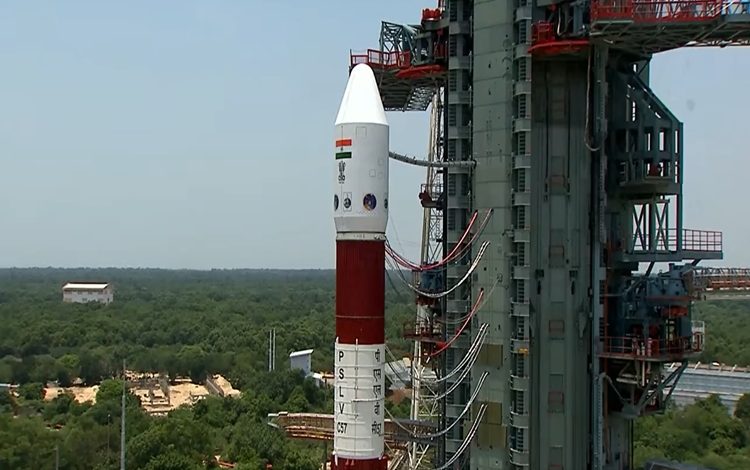
India’s journey towards the sun began today as the maiden flight mission took off precisely at 11. 50 am at the Sathish Dhawan Space Centre Sriharikota. The 44.4 metre tall PSLV-C57 rocket with a lift-off mass of 321 ton carries the spacecraft Aditya-L1 to study the Sun.
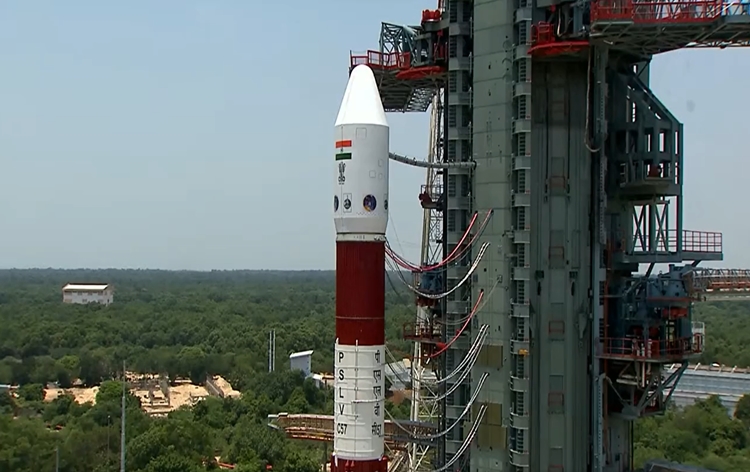
In a period of four months, Aditya L1 will reach the Lagrange 1 point. where the gravitational forces of a two body system like the Sun and the Earth produce enhanced regions of attraction and repulsion.
Aditya’sL1 mission is to study the solar winds and the Sun’ s atmosphere. It will carry seven payloads to observe the photosphere, chromosphere and the outermost layers of the Sun namely the Corona. This will help understand the problems of coronal heating.
Coronal mass ejection, pre-flare and flare activities, dynamics of weather and the study of the propagation of particles and fields in the interplanetary medium. Soon after India’s successful mission to the moon on August 23, Indian Space Industry witnessed another journey to the Sun which has been undertaken by four other space Centres in the World.
In its normal configuration PSLV is a four stage/engine expendable rocket powered by solid and liquid fuels alternatively with six booster motors strapped on to the first stage to give higher thrust during the initial flight moments.
PSLV C 57 carrying Aditya L1 is the XL variant – with longer strap-on motors carrying higher fuel quantity. The PSLV-XL variant was also used to launch AstroSat, India’s first dedicated Space Astronomy Observatory on September 28, 2015. ISRO has five types of PSLV rockets – Standard, Core Alone, XL, DL and QL. The major difference between them is the use of strap-on boosters which in turn largely depends on the weight of the satellites to be orbited.
XL variant of India’s Polar Satellite Launch Vehicle seems to have an interesting connection with Moon, Mars and now the Sun.The rocket made its maiden flight on October 22, 2008 for India’s first interplanetary mission – the Moon Mission-1 or Chandrayaan-1. And on 5.11.2013, the rocket was used for India’s first Mars Mission called Mars Orbiter Mission.Nearly 15 years after its first flight and on its 5th mission PSLV-C57 is being used for another inter-planetary mission – to study the Sun- by Indian Space Research Organisation.