

the brain and it’s ever-changing nature
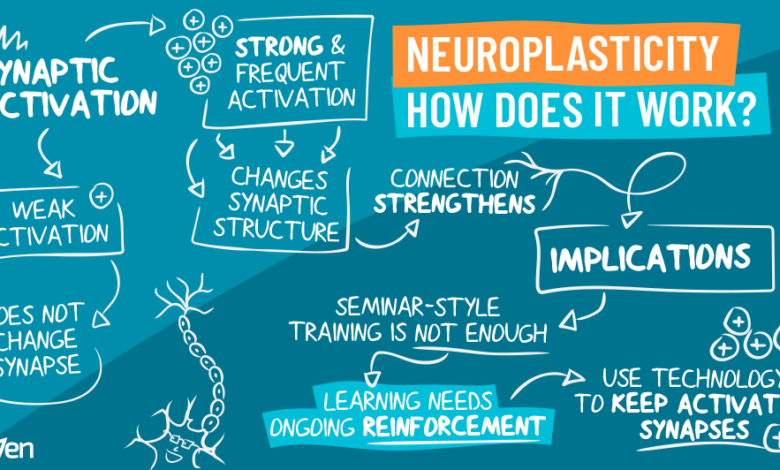
When we think about how our brain adapts to the changes around it, a lot of questions arise in our minds. The answer to most of these questions lie in neuroplasticity. This concept of neuroscience has changed how we used to think about the brain for the better.
Neuroplasticity can be roughly defined as the ability of the brain to change structurally as well as functionally throughout our lives. It is the brain reorganising itself by forming new neural connections in response to intrinsic or extrinsic stimuli.
For a long period of time, neuroplasticity was only said to exist in children and was supposed to be lost as we grow older. Thus, we thought that it wasn’t possible for adult brains to change and adapt due to stimuli.
However, from recent research, it’s been discovered that adult brains can undergo neuroplasticity as well and it’s not a phenomenon that only takes place during development. Nevertheless, it was also shown that young minds go through maximum plasticity. This is because by the time we are developed, our neural circuits start to mature and stabilise.
Neuroplasticity involves two major types of changes:
- Structural Changes: This refers to the brain’s ability to form new neural connections and change its physical structure. These connections can include neurogenesis (growth of new neurons), synaptogenesis (formation of new synapses), and the strengthening/weakening of existing synaptic connections.
- Functional Changes: This refers to the brain’s ability to change its functions from one part to another when it’s subjected to any brain damage, stroke, etc.

But how does neuroplasticity actually work? What is the pathway for our brains to change structurally or functionally?
Picture the brain as a road network. As a child, there are fewer roads and new roads can be established easily, so neuroplasticity is more efficient. When we develop further there are more well established and stabilised road pathways. The brain gets used to these pathways and they become strengthened and easier to go through. However, in case of any damage to these pathways, we have a tendency to create new pathways. So, neuroplasticity works for us as adults too. This is how we are able to change our habits as well as create new ones. It’s also used by the brain to help perform functions even after brain damage or strokes.
Some of the mechanisms that are followed are:
- Synaptic Pruning: The process of strengthening the more used synaptic connections while eliminating the others.
- Long Term Potentiation: This is the mechanism via which frequent stimulation strengthens synapses. It is thought that LTP is a key process underlying memory and learning.
- Neurogenesis: The growth of new neurons, particularly in the hippocampus.
- Myelination: The procedure that increases the speed and effectiveness of brain communication by insulating axons with myelin.
- Synaptogenesis: Formation of new synapses
Neuroplasticity is a complex yet super important phenomenon. It helps us evolve, learn, adapt, and become better versions of ourselves anatomically. We can try to increase our brain’s tendency towards plasticity by eating healthy, practicing mindfulness, getting quality sleep, exercising, and by promoting a better mental and social space for our body and mind. Our brain has potential to do so much, it’s just waiting for us to unlock it.