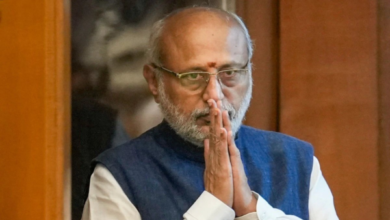

R.N. Kao: The Silent Guardian Who Built India’s Spy Network.
By Rahul Kilam #KilamsCorner
In an age where intelligence chiefs often make headlines and seek public validation, Rameshwar Nath Kao remains an extraordinary outlier. The founding father of India’s external intelligence agency—Research and Analysis Wing (RAW)—Kao built one of the most formidable spy networks in the developing world, yet chose to live and die in near-complete anonymity.
A Kashmiri Pandit by heritage and a quiet patriot by temperament, Kao was born in 1918 in Banaras and educated at the University of Lucknow before joining the Indian Imperial Police in 1939. From an early age, he stood out for his intellect and uncanny ability to see patterns where others saw chaos. His career took off in the Imperial Police during British rule, but it was the Republic of India that would come to rely most on his remarkable mind.
One of Kao’s earliest—and most telling—assignments was the investigation into the mysterious 1955 crash of the Air India flight Kashmir Princess. The plane, carrying Chinese journalists and thought to have been transporting Premier Zhou Enlai, exploded mid-air in what was suspected to be a sabotage attempt. Kao, then relatively unknown, was handed the file. What followed was a masterclass in intelligence work. He sifted through scattered evidence, navigated Cold War geopolitics, and uncovered leads that surprised even his British and American counterparts. That operation, often forgotten in the mainstream, was where Kao first demonstrated the calm precision that would become his signature.
But his true legacy began in 1968, when Prime Minister Indira Gandhi handpicked him to establish RAW, carving it out of the Intelligence Bureau. It was a move that faced resistance from within the system. Kao, however, built RAW brick by brick, recruiting a team of fiercely loyal officers—many of whom would go on to become legends themselves.
Under his leadership, RAW played a critical, behind-the-scenes role in the 1971 liberation of Bangladesh. It trained Mukti Bahini guerrillas, disrupted Pakistani command structures, and ensured that India stayed two steps ahead. For all practical purposes, Kao had converted RAW from a fledgling agency into a geopolitical tool of statecraft. Yet, outside the intelligence community, few even knew his name.
His influence extended far beyond espionage. He was a trusted advisor to multiple prime ministers, including during India’s most turbulent years—Emergency, Operation Bluestar, and the aftermath of Indira Gandhi’s assassination. But he never courted power, fame, or media. He refused all awards and lived a reclusive life after retirement. His biography was published posthumously, and even that reads more like a tribute than a tell-all.
In today’s world of leaks, spin, and viral revelations, Kao’s model of intelligence work seems almost anachronistic. But it is perhaps the reason RAW remains as effective and feared as it is. The culture he instilled—of discipline, discretion, and dedication—still defines the agency.
He passed away in 2002, having received no public honors, no grand farewells. But within India’s intelligence corridors, his presence looms large. Operatives still call themselves “Kaoboys” in reverence—proof that real legends don’t need a spotlight to cast a long shadow.
In remembering R.N. Kao, we are reminded that national security is not just built on satellites and firepower, but on silent sentinels who guard the nation from within the shadows.