
Articles & OpinionFeature StoriesJammu & KashmirTrending Photo
Madhav koul savior of Hindus of shopian was martyred by Muslim religious fanatic on the Kila Bagh in 1931.
Madhav Koul (Unsung Hero of 1931)
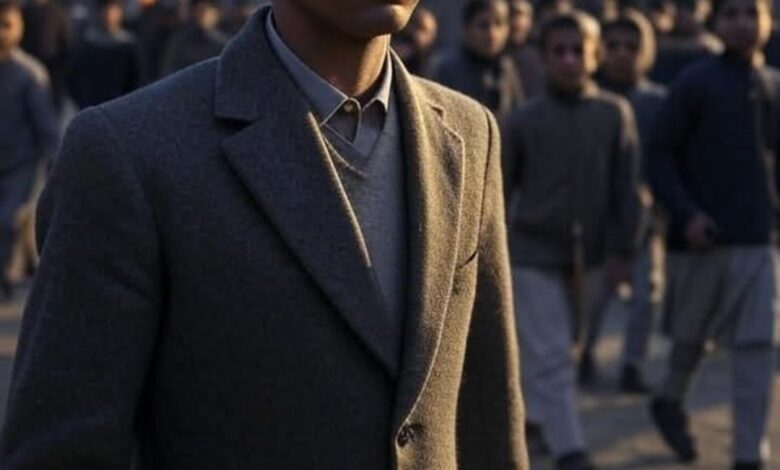
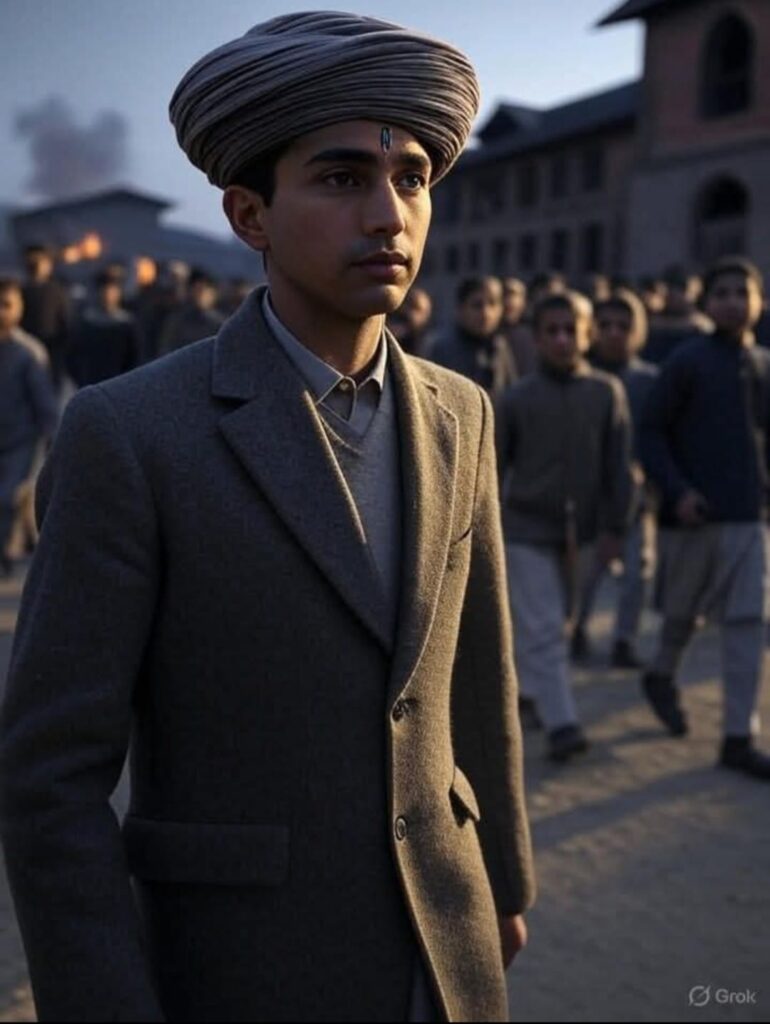
Madhav koul savior of Hindus of shopian was martyred by Muslim religious fanatic on the Kila Bagh in 1931. He was a court official (Nazir) in shopian court and was on duty. He was brutally killed while saving small children trapped in a school. He was brutally killed, his eyes were taken out with sharp edges knives and his body was mutilated.
During 1931 there was religious uprising which were initiated by the people from outside Kashmir. The communal riots that engulfed Srinagar (Kashmir) on July 13, 1931 were the culmination of prolonged intrigues by the British to violate the Treaty of Amritsar, signed with Maharaja Gulab Singh in 1846, founder of the kingdom of Jammu and Kashmir.
Their aim was to control the Northern Frontiers of India to keep an eye on the ethnic tribes that inhabited these regions, and Russian advances. They were aware that the Himalayas, of which the State of Jammu and Kashmir was a critical constituent, defined the civilization and cultural moorings of the Indian Nation. July 13 is an important date in Kashmir. In 1931, on this day in Srinagar and later on for months elsewhere too, the first ever organized communal carnage in the recorded history of modern Kashmir took place. Hundreds were murdered, burnt alive, and tossed into the river, molested, raped, robbed and even forcibly converted to Islam. When the rioters were challenged and sought to be controlled by the police, a few of them died. The dead rioters were hailed as martyrs by their cohorts.
It was only later, in independent India no less, that the state government of Jammu and Kashmir formally sanctified those criminals and decided to commemorate the dead rioters as fallen heroes, every year on July 13. Politics apart it is important to know the facts of what happened then. In 1931, Maharaja Hari Singh was the sovereign ruler of the Jammu and Kashmir, which included Laddakh, Gilgit-Baltistan, Muzfarabad-Mirpur, Aksai Chin and Saksham Valley. The British wanted him to lease them to the Gilgit agency.
The Maharaja was reluctant. He was a rare Hindu king who ruled over his predominantly Muslim subjects. They decided to turn a few screws. An Ahmadi (now declared non Muslims of government of Pakistan) from Peshawar Abdul Qadir was brought into Srinagar by the British intelligence in the garb of a cook for the local British resident .A public meeting was organized at the Shah-e-Hamadan, Khanqah Mohalla. There, Abdul Qadir delivered a fiery speech. He quoted liberally from the Quran to incite the Muslims against the Maharaja. Spewing communal venom and inflaming passion, he asserted that the book forbade Muslims to subject themselves to an infidel Hindu ruler.
He also incited them to cow slaughter, which was forbidden under the law. Qadir was ordered to be arrested for sedition. His arrest was resisted. Later his trial too was sought to be disrupted repeatedly. It was then decided to hold his trial in the jail premises itself. The hearing in jail fell on 13th July. On that day, a mob stormed the jail and demanded admittance along with the Sessions Judge.
When the Judge had passed the gates, the crowd also attempted to get in. The other gates had been forced and the inner gates were attacked. At the suggestion of the Judge, two Muslim lawyers, representing the accused, harangued the visitors to go out of the Jail precincts. Finding that there was no possibility of ingress, the crowd went out and started stoning officials and set fire to the police lines. The police force was then called in. All efforts to pacify the unruly mob proved futile. While there was commotion outside the jail there was also disturbance inside, prisoners tried to force open the iron gates. About this time, certain prisoners were being taken from the court to the jail. The crowd stoned the policemen and the prisoners were liberated. The prospect was by no means satisfactory.
The District Magistrate’s order was defied, who had been summoned to the spot by the time, and had declared the crowd to be an “unlawful assembly” and ordered its dispersal. The order was defied and finding that the mob could neither be pacified nor dispersed, the District Magistrate directed fire to be opened. The crowd fell off but later it re-assembled and resumed stoning. It had to be dispersed with a Lathi charge. Part of the crowd, however moved towards the Hari Parbat Fort: the cavalry had to pursue it and disperse it again. A section of the recalcitrant’s proceeded towards a place called Maharaj Ganj which is a business locality and loot over an extensive area followed. From Bhori Kadal to Alikadal a long stretch, Hindu shops were raided. Other localities such as Safakadal and Nawakadal too formed the centers of loot. Bazaar streets were littered with property, books of accounts were burnt: the Hindu shopkeepers were molested, in short, pandemonium prevailed.
The Hindu merchants lost lakhs worth of goods. The most extraordinary portion of the story was that almost simultaneously with the happenings at Srinagar, there was an uprising at a place named Vicharnag, some 5 or 6 miles away. It has been stated that untold atrocities were committed there; men owning lakhs were reduced to indigence and women were subjected to the worst possible and the most indecent assaults.
A military force was dispatched to the place, but by that time the havoc had been completed. Elsewhere too, the Hindus were the victims of ambuscade. Some lost their lives and many suffered physical injuries. Stray assaults continued till long after. It was an Islamist rebellion against the Hindu king. Sheikh Abdullah too was found complicit in the uprising. He was arrested, tried, convicted and sent to prison. But soon in 1932, he was pardoned by the Maharaja and released within a few months without completing the sentence. But aftershocks continued over into weeks and months. It also wrecked havoc in far flung Rajouri, Kotli and Mirpur. Innocents were mercilessly killed and many were converted to Islam forcibly. Religious places of worship, of Hindus and Sikhs, that is. Temples and Gurudwaras, all met with the same fate. Many were completely damaged and desecrated. In other few cases, though buildings were not damaged, the sacred idols and holy books, including the Guru Granth Sahib, were badly damaged burnt and desecrated.
These happenings known as “88 NA SHAURASH” (Riots of 1988 Bikram or 1931 Christian Era) are still in the memory of not only the survivors of that time but also of their subsequent generations, and the refugees of 1947, scattered throughout India and awaiting Rehabilitation. To calm down the situation Maharaja Hari Singh organized the visit of Maulana Abdul Kalam Azad and Tej Bahadur Sapru. They tried to dissuade Muslims leaders of Kashmir about their struggle, campaigned in valley and asked people to cooperate with the Maharaja’s government. This resulted in pacifying some Muslim leaders for some time. And through the intervention of a liberal Muslim politician from British India Meher shah, an agreement was achieved between Muslim leaders of Kashmir and the government. The agreement is known as Temporary truce. The propaganda again started in Jama Masjid on August 28, 1931 which made public were very angry. Subsequently the revolt began to ripen. The arrests of several Muslim leaders on 21st September 1931, the breaches of Temporary truce and conspiracies like Riots Enquiry Commission, heated Muslim rage into agitation. Complete hartal was observed. 24th day of September 193 Mirwaiz Yusuf Shah gave a new turn to the movement in September 1931. He called for Jihad, much to the annoyance of the Maharaja. Mirwaizs call evoked massive response. Thousands of people came out with shovels, axes, sticks and assembled at Khanyar near Dastgeer Sahib’s shrine on September 24. Some people were also armed with guns. However, no untoward incident took place.
On same fateful day 24th September 1931 angry mob shouting slogans against the Maharaja had been moving towards the Munsif court and police station. The mob wanted to immediately release a Pir (Molvi) who was facing trail in Munsif court shopian for the seduction charges Sensing the trouble which this religious fanatic mob may create in the town and may target the Hindu minority and their properties.
Madhav koul after receiving this information immediately asked the Hindu shopkeeper close the shop and move home mostly belonged to near Hindu village Bhatpara. But most of these people were reluctant to move as their children are trapped in the school. He told them you just move out and he will take care of them, He straight away moved towards the middle school and shifted children to safer place and moved towards the court during the time he was taped by the crowd at Kila Bagh and was brutally killed and his body was mutilated. After that angry crowd when on the rampage dismantled and became unstoppable one storey of the police station with the stoning and staring burning public and Hindu minority properties. When crowd went out of control police was forced to fire. This was the first time in the history of shopian bullet being fired.
In the late evening army came and took control the situation when crowd disbursed. On same day 24th September Maharaja Government issued a ordinance called 19L which gave powers to the army officers and district magistrates to arrest and search without warrant on suspicious people After that Maharaja Government came in to the action search was launched for the killers and main accused Khalil Banday in the neighboring towns and villages culprits Mohammad Sultan Nengroo Abdul Gaffar and Mohammad wani were arrested and main accused Khalil Banday remained absconding. When a new government was formed under Sheikh Mohammad Abdullah brutal killers of Madhav koul were declared freedom fighters and their families were given pension by the state government after 1948.