
Articles & OpinionFeature StoriesJammu & KashmirTrending Photo
I Was Forced into Exile, But My Civilisation Still Lives Within Me
The story of a homeland lost, a civilisation remembered, and an identity that refuses to disappear.
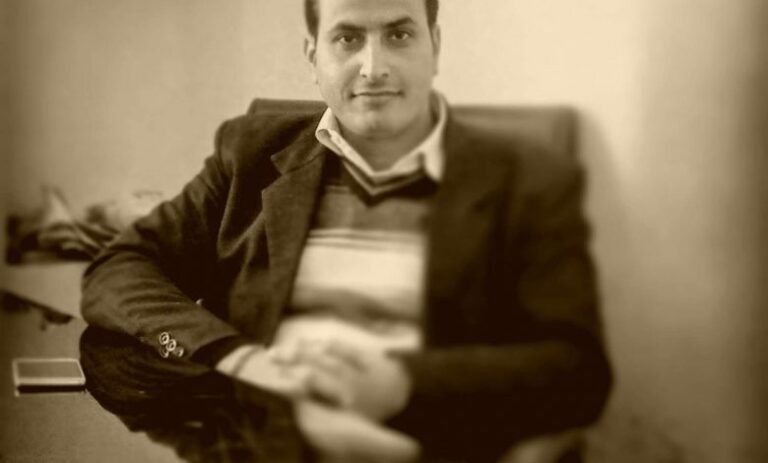
By Rahul Kilam #kilamscorner
There are nights when I close my eyes and try to imagine what it would feel like to walk through my homeland again—not as a visitor, not as a stranger searching for traces of a forgotten past, but as someone who belongs there.I imagine the familiar mountains standing silently in the distance, the cold air touching my face, the old houses carrying stories within their walls, and the temples where generations before me had bowed their heads in prayer. I imagine walking through the streets without having to explain who I am, where I come from, or why my heart aches for a place I cannot freely call home. But then I open my eyes, and reality returns. I am in exile.
Not an exile chosen for adventure, education, employment or a better future. Mine is the exile of separation, of fear, of being driven away from the land that shaped my ancestors and gave meaning to my existence. It is the exile of leaving behind more than a house or a piece of property. It is the exile of being separated from a civilisation, a culture, a language and a way of life that had traveled through generations before reaching me. I did not leave because I stopped loving my homeland. I left because circumstances made staying impossible for my family and my community. And perhaps that is the cruelest part of exile: you can be forced to leave the place you love most, yet spend the rest of your life carrying it everywhere you go.
The home that lives in memory, often wonder what a homeland truly means. Is it merely a geographical boundary drawn on a map? Is it the land registered in a revenue record, the house standing beside a road, or the address written on an identity document? Or is a homeland something deeper? Perhaps it is the voice of an elderly person telling stories of the past. Perhaps it is the fragrance of a festival, the sound of prayers rising from an ancestral temple, the language spoken around a family hearth, or the knowledge that generations before you lived, loved, struggled and died on the same soil. For me, Kashmir has always been more than a place.
It is a memory inherited before I was old enough to understand it. It is an identity that existed before my birth and will, I hope, continue long after me. Yet history can be cruel to those who believe that their connection to a place is permanent. The displacement of Kashmiri Pandits, particularly during the turmoil of 1989–90 and the years that followed, tore thousands of families away from their ancestral homes. Fear, threats, violence and insecurity transformed the meaning of an ordinary night.
Homes that had sheltered generations were left behind. Families scattered across unfamiliar cities. Children grew up hearing about villages they could no longer visit as freely as they should have been able to. A homeland that had once been part of everyday life became something to be remembered, described and longed for. For many of us, exile did not end when we reached a place of physical safety. It continued in the silence of family conversations, in the grief of elders, in the photographs of ancestral houses, and in the questions of children who wanted to know why their parents spoke of Kashmir with such love and sorrow.What do you tell a child who asks why the place of their ancestors is not the place they call home? How do you explain that sometimes history does not ask whether you are ready before it changes the course of your life? And how do you explain that you can belong to a place even when you are no longer permitted to experience it as home? These are questions for which no temporary shelter can provide an answer.
The civilisation my ancestors carried
But there is something about my inheritance that exile has not been able to take away.My ancestors did not leave me only memories of a geographical place. They left me a civilisation. When I look back through the long corridors of history, I see a world of Sanskrit learning, philosophical inquiry, spiritual reflection and intellectual achievement. I see a tradition that sought to understand the nature of existence, the relationship between consciousness and the universe, the meaning of knowledge, and the responsibilities of human life. The Sanskritic tradition of the Indian subcontinent has roots extending back thousands of years. It has produced
extraordinary works of philosophy, literature, linguistics, mathematics and spiritual thought.
Its history is not a story of a single generation but of countless generations preserving, questioning and transmitting knowledge. And Kashmir holds a remarkable place within that history. This land was not merely a landscape of mountains and rivers. It was also a landscape of ideas. Here, scholars and philosophers contributed to traditions that travelled far beyond the boundaries of the Valley. Kashmir Shaivism developed profound reflections on consciousness and reality. Abhinavagupta became one of the great intellectual figures of Indian philosophy and aesthetics. Kalhana’s Rajatarangini offered a remarkable chronicle of Kashmir’s kings and political past.These names are not merely names in a history book to me.
They are reminders that my homeland possesses an intellectual inheritance that deserves to be studied, preserved and passed on.When I think of this civilisation, I do not imagine an unchanging past. I understand that centuries bring transformation, that cultures interact, and that traditions evolve. A civilisation survives not because every generation lives exactly as its ancestors did, but because each generation finds a way to carry its essential inheritance forward.That is what I want to do.I want to read the texts that shaped my intellectual ancestors.
I want to understand the history that formed my identity. I want to preserve the traditions that might otherwise become distant memories for future generations. I want my children, and the children who come after them, to know that their ancestry is not something to be ashamed of, concealed or forgotten.
It is something to understand.
Something to cherish.
Something to carry with dignity.
The sacrifices of those who came before me.
Sometimes I think about my ancestors and wonder what they must have endured.
How many uncertainties did they face?
How many political changes did they witness?
How many times did they have to defend their beliefs, preserve their learning or rebuild their lives?
History rarely records every sacrifice made by ordinary families. It remembers kings, rulers, battles and political movements, but the quieter struggles of generations often disappear into the passage of time.Yet civilisations do not survive through great scholars alone. They survive because ordinary people continue to practise their traditions, teach their children, preserve their texts, celebrate their festivals and remember their ancestors.
A grandmother passing a prayer to her grandchild is preserving a civilisation.
A family keeping an old manuscript safe is preserving a civilisation.
A student learning Sanskrit or Sharda script, not because it is fashionable but because it connects them to their intellectual heritage, is preserving a civilisation.
And a displaced person refusing to forget their homeland is preserving something that history cannot easily replace.
I am proud of the generations that came before me. Their endurance gives me strength, especially when I think about what was lost through displacement. But I also understand that pride in one’s ancestors must carry a responsibility. It cannot remain merely a sentiment expressed on special occasions. It must become an act of preservation.
If I claim to belong to a civilisation of learning, then I must learn.
If I claim to belong to a civilisation of philosophy, then I must think.
If I claim to honour my ancestors, then I must preserve what they entrusted to me.
Otherwise, my pride would be nothing more than words.
There is another reason I cannot look at exile as merely a personal tragedy. As a student of law and history, I see it as a question that demands answers. What happens when citizens are forced to abandon their homes because they fear for their lives? What responsibilities does a democratic state have towards people who have suffered displacement? How can justice be pursued when years pass, generations grow older, and the places associated with a community’s identity become increasingly distant?The law speaks of life, liberty, equality, religious freedom and cultural rights.
The Constitution of India protects personal liberty under Article 21, freedom of religion under Article 25, and the cultural rights of communities under Article 29.These constitutional principles acquire a deeper meaning when viewed through the experience of displacement.For the displaced, freedom is not merely the right to exist somewhere. It includes the ability to live without fear, practise one’s faith, preserve one’s culture and hope that returning .It requires the preservation of evidence, the acknowledgement of suffering, accountability where wrongdoing is established, protection of property rights, and conditions in which people can rebuild their lives with dignity.Nor can the passage of time be treated as a complete answer to historical injury.Decades may pass, but the questions remain. What happened? Why were people forced to leave? What can be done to protect their rights? What would make a return safe and meaningful? How can future generations learn about this history honestly?
As a student, I do not want to approach these questions with anger alone. I want to approach them with evidence, reason and a commitment to justice. Because if history teaches us anything, it is that the wounds of the past do not disappear simply because society grows tired of discussing them. They heal when they are acknowledged, understood and addressed. My pain does not require another person’s hatred. There are moments when the pain of displacement turns into anger. It is difficult not to feel anger when you think of a community separated from its ancestral homes, of families who lost their sense of security, and of children who inherited a longing they never chose.
It is also difficult not to ask painful questions about the religious and political forces that contributed to this tragedy. But I have come to understand something important: defending my history does not require me to hate an entire ecosystem. The responsibility for violence and intimidation belongs to those who committed, encouraged or enabled them, not automatically to everyone who shares their religion.My grief is real, and it does not need to be exaggerated.
My community’s suffering deserves recognition, and it does not need to become a justification for collective blame. I can condemn the persecution of Kashmiri Pandits without denying the humanity of others. I can demand justice without abandoning reason. I can defend my cultural inheritance without believing that another person’s dignity must be diminished for mine to matter. This is not weakness. It is a choice to ensure that the pain inflicted upon me does not determine the kind of person I become. I refuse to let exile take my home and then take my conscience as well. The homeland I still hope to see Sometimes I imagine returning to Kashmir. I imagine standing before an ancestral temple, not as someone trying to reconstruct a lost memory, but as someone who has finally returned to a place of belonging. I imagine walking through the streets without fear, feeling that the distance between my present life and my ancestral past has finally begun to close. I imagine being able to show younger generations the places they have heard about in family stories.
I imagine telling them, while standing on that soil, that history is not something that exists only in books. It is also present in the places where people lived, prayed, studied, celebrated and dreamed. But I know that meaningful return cannot be built on nostalgia alone. It requires security, dignity, trust, protection of property and cultural heritage, and confidence that displacement will not be repeated. It requires serious institutional commitment rather than promises made for political convenience. Above all, return must be a genuine choice.
A displaced family should not have to choose between preserving its identity and ensuring its safety. No citizen should have to abandon their ancestral culture in order to build a secure future elsewhere. Until that possibility becomes real, I will continue to preserve the Kashmir that lives within me. I will learn its history. I will remember its scholars. I will protect the stories passed down through my family. I will refuse to let the next generation inherit only silence. And I will continue to hope that one day the word exile will describe a chapter in our history rather than the permanent condition of our lives.
I am still standing.
Perhaps the most remarkable thing about exile is that it can change where a person lives without necessarily changing what gives that person meaning. I am away from my homeland, but I have not forgotten it. I am separated from many of the places associated with my ancestors, but I have not surrendered my connection to them. I have experienced the distance between a civilisation’s historical inheritance and the uncertain life of a displaced community, but that distance has made me more determined to understand and preserve what I have inherited.
I am still standing.
Not because I have forgotten the suffering of my community, but because I refuse to allow suffering to become the only story told about us. We are more than the circumstances that forced us to leave. We are more than the statistics of displacement. We are more than the photographs of abandoned houses and the memories of a lost past. We are a community with a history, a living culture, an intellectual inheritance and a future that deserves to be protected. My ancestors entrusted me with something that cannot be measured in land or property alone. They entrusted me with memories, traditions, knowledge and a sense of belonging that extends across generations. I may not be able to carry my ancestral home wherever I go. But I can carry the language of my inheritance. I can carry its philosophical questions, its historical lessons and its cultural practices. I can ensure that my children understand where they come from, even if they grow up far from the place their ancestors called home.
And perhaps that is how a civilisation survives exile: not by denying its wounds, but by refusing to let those wounds become the end of its story. I was forced away from my homeland, but I was not forced to forget my ancestors. I was separated from my civilisation’s sacred places, but I was not separated from the responsibility of preserving its heritage. I was made to live far from the land that shaped my identity, but I will not allow distance to erase that identity. I am in exile, but my civilisation is not in exile from me. It lives in the history I study, the traditions I preserve, the faith I practise, and the memories I refuse to surrender. My roots remain in Kashmir. My inheritance reaches across thousands of years of Indian civilisational history. My hope for justice remains alive. And while I continue to live, learn and remember, the story of my ancestors will continue through me. They may have forced me to leave my home, but they cannot decide what I remember, what I preserve, or what I pass on to the generations that follow. I am still here. I am still learning. I am still remembering.
And I am still standing.
Because exile may separate me from the land of my ancestors, but it cannot, unless I surrender it myself, separate me from the civilisation they entrusted to me.
By Rahul Kilam #kilamscorner