

Articles & OpinionFeature StoriesTrending Photo
The Silence That Betrays Childhood
Why body safety education, parental awareness and collective responsibility are essential to protecting our children.
The great South African leader and Nobel Peace Prize laureate Nelson Mandela once rightly observed:
“There can be no keener revelation of a society’s soul than the way in which it treats its children.”

These profound words remind us that the true character of a society is reflected not merely in its achievements, institutions or material progress, but in the care, dignity and protection it extends to its youngest members. Childhood is supposed to be the most beautiful chapter of human life, a period defined by innocence, curiosity, unconditional love and dreams yet to unfold. Every child deserves to grow up in an environment where they feel secure, respected and protected.
Protecting children is more than just parental love. It’s about being aware, being able to talk openly, having the institutions that are responsible for children’s welfare actually take that responsibility and having a society that is brave enough to face the difficult truths.
Childhood is the most beautiful period of human life, the period of innocence, of curiosity, of unconditional love and of dreams yet to be realised. Every child is entitled to a childhood in which they feel safe, respected and protected. Under the surface of the very familiar and comforting world of home, school and the social environment there are realities which we are all too often unwilling to face. Child sexual abuse and inappropriate physical contact are amongst the most sensitive of all issues not simply because of the gravity of the offences but because of the silence which so often prevails.
Our body is a gift from Allah and it is absolutely essential that we teach children to respect and look after it. We teach them how to cross the road, how not to touch dangerous things, how to look after themselves in terms of hygiene and what to do in an emergency. Just as important, though, is the lesson that we don’t always teach them about personal boundaries, about their own body and the difference between appropriate and inappropriate touch.
The resistance to talking about this is absolutely down to socialisation. A lot of parents find the idea of discussing it with their kids quite uncomfortable, quite inappropriate for a young child, or indeed against the grain of what they consider to be normal. Some will say it’s just too upsetting for a child. We have to bear in mind though that awareness doesn’t in any way destroy innocence. It’s ignorance which leaves you vulnerable. A child who is aware of their own safety is in a much better position to spot inappropriate behaviour, to know what to do if it happens and to be able to tell someone.
The ‘good touch / bad touch’ concept should therefore be a fundamental part of child education, taught in a simple, sensitive and age appropriate way. A good touch is one that conveys affection, care and reassurance (a mother’s hug, a father’s gentle pat, a teacher’s appropriate gesture of encouragement etc). A child must also be made aware that affection should never be coerced. A child has the right to say no to a hug, a kiss or indeed any physical contact that makes them feel uncomfortable, no matter what the relationship is.
An inappropriate touch is one that breaches a child’s privacy, their sense of dignity or their bodily boundaries. Touching a child in a private area for any reason other than a legitimate caring or medical purpose is a red flag. Asking a child to touch someone else’s private parts is inappropriate. Coercing a child into physical intimacy or into engaging in any form of sexual activity is a serious issue. A child should also be made aware of inappropriate requests, threats, manipulation and attempts to make them keep any uncomfortable interactions secret.
One myth that needs to be busted is that danger always comes from a stranger. It may just as easily come from someone you know, from a relative, a neighbour, a family friend, an acquaintance or indeed someone the child already trusts. That’s why it’s not enough just to teach children to avoid strangers. They need to learn to spot inappropriate behaviour rather than simply decide that someone is safe or not on the basis of who they are or who they know.
An effective way of instilling this awareness is via the three simple words: NO, GO and TELL. A child should be encouraged to say NO if they are being made uncomfortable, to GO away from the situation and to IMMEDIATELY tell a trusted adult. It is equally important to stress that a child may at times be unable to move or speak up and may in fact just freeze. That response in no way makes the child responsible for what has occurred. The responsibility always lies with the person who has behaved inappropriately.
Parents have the primary responsibility of creating an environment in which children are free to talk about their own personal problems without the fear of being punished, made to feel embarrassed or blamed. In many homes however, children are brought up to obey every elder without question. They may be encouraged to go and give a hug to a relative, to sit on someone’s lap, to be physically affectionate with them even if they are not at all comfortable doing so. Respect for the elder is a very important social value but it should never be at the expense of the child’s own safety. To teach a child to set boundaries is not to be disrespectful; it is a vital life skill.
Just as important is the response that parents give when a child tells them about something unpleasant. Rather than interrogating the child about what they did or dismissing their account, parents have to listen, listen properly and take the child’s account seriously. “Why didn’t you tell me before?” or “Are you absolutely certain you understood that correctly?” are all sorts of things that can have the effect of shutting the child down. The child needs to hear three very simple things: I believe you, it’s not your fault and I’ll protect you. If a child does disclose abuse then the matter has to be dealt with in the appropriate way with the necessary professional and legal support.
Education institutions too need to move beyond the traditional view of what education is. Schools are not just places where you go to get a certain level of academic achievement. They are institutions in which the development, confidence and welfare of the young person is of paramount importance. Age appropriate sessions on body safety, personal boundaries, online behaviour and how to report would be a vital part of any school’s awareness programme. All staff would need to be appropriately trained to be able to spot the warning signs and to respond to any disclosure in the correct manner. Institutions would have to have clear child protection policies in place, appropriate levels of supervision and an environment in which any complaint would be taken seriously regardless of the position or status of the individual making it.
The challenge has become even more complicated in the digital age. With smartphones, social media, online games and messaging apps the world of the child has vastly expanded but so too has the potential for manipulation and exploitation. Predators can pose as children, build up a friendship, gain trust, ask for private images, use threats and emotional blackmail to get a young person to stay quiet. Digital safety has to be part of parenting. Children need to be taught that they should never give out their private photos, their passwords or any personal details to someone they don’t know. They need to be empowered to report any suspicious online behaviour without fear of being in any way punished.
Beyond the home and the school there’s another very uncomfortable reality that society has to face, which is the tendency to protect one’s social standing at the expense of a child’s dignity. In some cases the family will simply not report an abuse because the person accused is a relative, a neighbour or someone of some social standing. The fear of the public censure, the family row and the social stigma is often greater than the desire to see justice done. That attitude has to change. No relationship, no social standing, no family reputation can be more important than the safety and future of the child.
A child’s disclosure must never be an opportunity for gossip, for public judgement or for victim-blaming. Families must never attempt to resolve serious allegations through private settlements or by pressuring the child into silence. The appropriate course of action is to report the suspected abuse to the relevant authorities and to do so
in a way which protects the child’s privacy, their dignity and their emotional wellbeing.
India has a legal framework in place to deal with these issues via the Protection of Children from Sexual Offences (POCSO) Act, 2012. This legislation protects children under the age of 18 from sexual assault, sexual harassment and pornography. It also provides for child sensitive procedures in the course of investigation and trial. There is the Child Helpline 1098 for children in need of assistance and 112 for an emergency. The law will only work in practice if people are aware of it and are prepared to act appropriately.
There’s also a need to appreciate that the onus of preventing abuse cannot be placed entirely on the child. Teaching a child to say no is obviously a key part of the process, but it doesn’t mean that the responsibility of preventing abuse is somehow transferred to the child. The responsibility lies with the adults, the institutions and the authorities to create safe environments, to hold people to account and to ensure that children are never left to face potentially dangerous situations on their own.
Awareness is one form of protection; responsible adult supervision, institutional protection, effective reporting and prompt intervention are equally vital.
Perhaps the most important thing we need to do is change our mindset. We need to stop seeing conversations about body safety as something to be embarrassed about and start seeing them as absolutely fundamental to child development. Our religious beliefs, our cultural mores and our sense of social responsibility should be ones that encourage us to protect the dignity of the child rather than inhibit us from talking about things which could in fact be potentially damaging to that child.
A society is not simply judged by the level of education of its citizens, the number of institutions it has or the material standard of living it has achieved. The true measure of a society is in how it treats its most disadvantaged members. If children cannot feel safe in their homes, in their schools and in their communities then our whole concept of social progress is still very much in the air.
Protecting childhood requires courage, compassion and a collective commitment. Parents need to listen, teachers need to educate, institutions need to act and society as a whole needs to get over the culture of silence. Every child must know that their body is their own, that their boundaries are important and that their voice will be heard.
Let’s not wait for a tragedy to occur before we start having the conversation that should have happened a long time ago. A child’s safety is not a family issue in any sense of the word. It’s a social issue.
About the Author
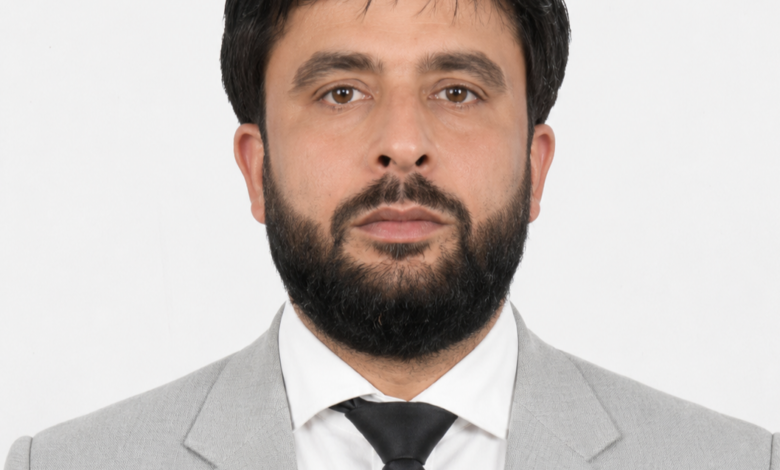
Aubaid Ahmad Akhoon is an educator, columnist, motivational speaker, and Associate Editor of Education Quill. He also offers modern home security solutions, including VDP and CCTV systems across Kashmir.
Phone: 9205000010 / 9205000016
Email: [email protected]