

Natural calamities
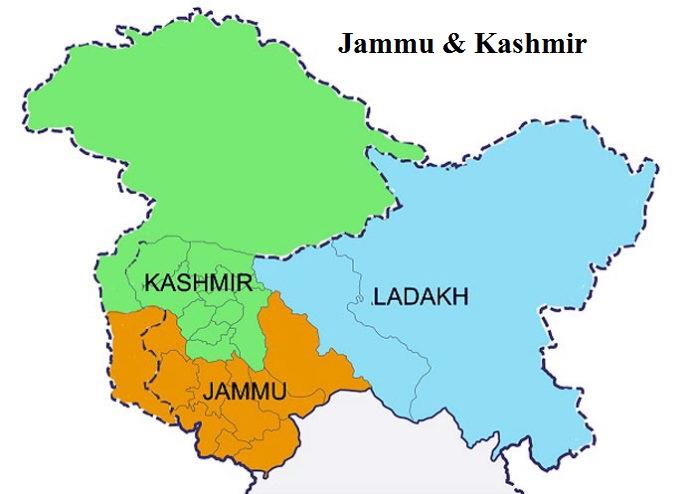
Jammu and Kashmir is a multi disaster prone area and the union territory is more vulnerable to earthquake and flood hazards, though landslide events also occur frequently in many parts of the UT.As per critical findings of Multi Hazard Risk Assessment for Jammu and Kashmir it was given out that the combined Average Annual Loss for flood and earthquake hazards for the UT of J&K is INR 1,774 crore with the major loss driver being residential buildings. Under JTFRP, which is funded by the World Bank, J&K is carrying out several disaster risk reduction measures in addition to reconstruction activities. RMSI has carried several technical analyses and presented Multi-Hazard Risk Assessment (MHRA) for the entire J&K and Ladakh UTs.
The extensive MHRA for J&K conducted by RMSI included physical vulnerability survey of 42,000 buildings, survey of 30,000 households as part of the social vulnerability survey and the procurement of a high-resolution Digital Terrain Model (DTM) for the flood-prone areas of the two UTs. The Final Report of the MHRA study provides the key findings of the survey, recommendations, and the way forward for the government towards disaster risk resilient development planning and separate reports for the UT of J&K and UT of Ladakh.
The Average Annual Loss (AAL) due to earthquakes for J&K is INR 1,488.44 crore, which is about 0.15% of the total exposure value. Landslide hazard susceptibility analysis shows that the losses are predominantly for residential buildings followed by losses to transportation infrastructure. The districts with the highest number of residential buildings, in landslide susceptible zones are Doda, Ramban, Reasi, Poonch, Baramulla, Rajouri, Kishtwar, and Udhampur (ranked from highest to lowest).The riverine flood hazard AAL for J&K is INR 286.50 crore, which is about 0.03% of the total exposure value of the UT. Srinagar district has the highest losses due to riverine flood followed by Baramulla district.
The flash flood AAL for J&K is INR 6.38 crore. The major losses are due to damages to bridges, schools, and commercial and residential buildings, which together contribute about 73% of the total losses, with damages to bridges contributing a significant share of 29.5%. Rajouri district of Jammu has a higher percentage of the population that is likely to be affected due to flash floods. RMSI conducted an avalanche hazard assessment in the UT’s civilian-occupied areas.
The evaluation identified as many as 659 avalanche sites and classified them based on frequency and severity. Assets worth INR 335 crore are estimated to be in potential avalanche-prone areas in UT of J&K. A major part comprises of buildings (61%) and transport infrastructure (34%).