
How Srinagar-Jammu road, rail link will integrate Kashmir with rest of India
The BJP government at the Centre has set December 2023 as the deadline for most of the communication infrastructure—including the ambitious road and rail links between Srinagar and Jammu—in Jammu and Kashmir.
This is obviously for a glaring political purpose: The Narendra Modi government, following the erstwhile State’s reorganisation and withdrawal of the special status in August 2019, looks keen to add maximum possible feathers to its cap before the Lok Sabha elections in 2024.
“Yes, that’s the deadline for most of these projects which the Prime Minister should dedicate to the nation ahead of the Parliamentary elections in 2024”, said a top ranking official source. He confirmed that there were “clear-cut instructions” from the Centre to complete the four-lane upgradation of the Srinagar-Jammu highway as well as the Banihal-Katra rail link.
While most of the works on the highway have been already completed from Srinagar to Banihal on the Kashmir side and Jammu to Nashri on the Jammu side, a length of around 70 km from Banihal to Nashri, which includes 6 small tunnels, is still underway. Of the 9 small tunnels, 3 have been completed. Similarly, the rail link between Srinagar and Banihal on the Kashmir side and Jammu to Katra on the Jammu side is already operational. Work is still underway on the most treacherous leg of 111 km from Banihal to Katra.
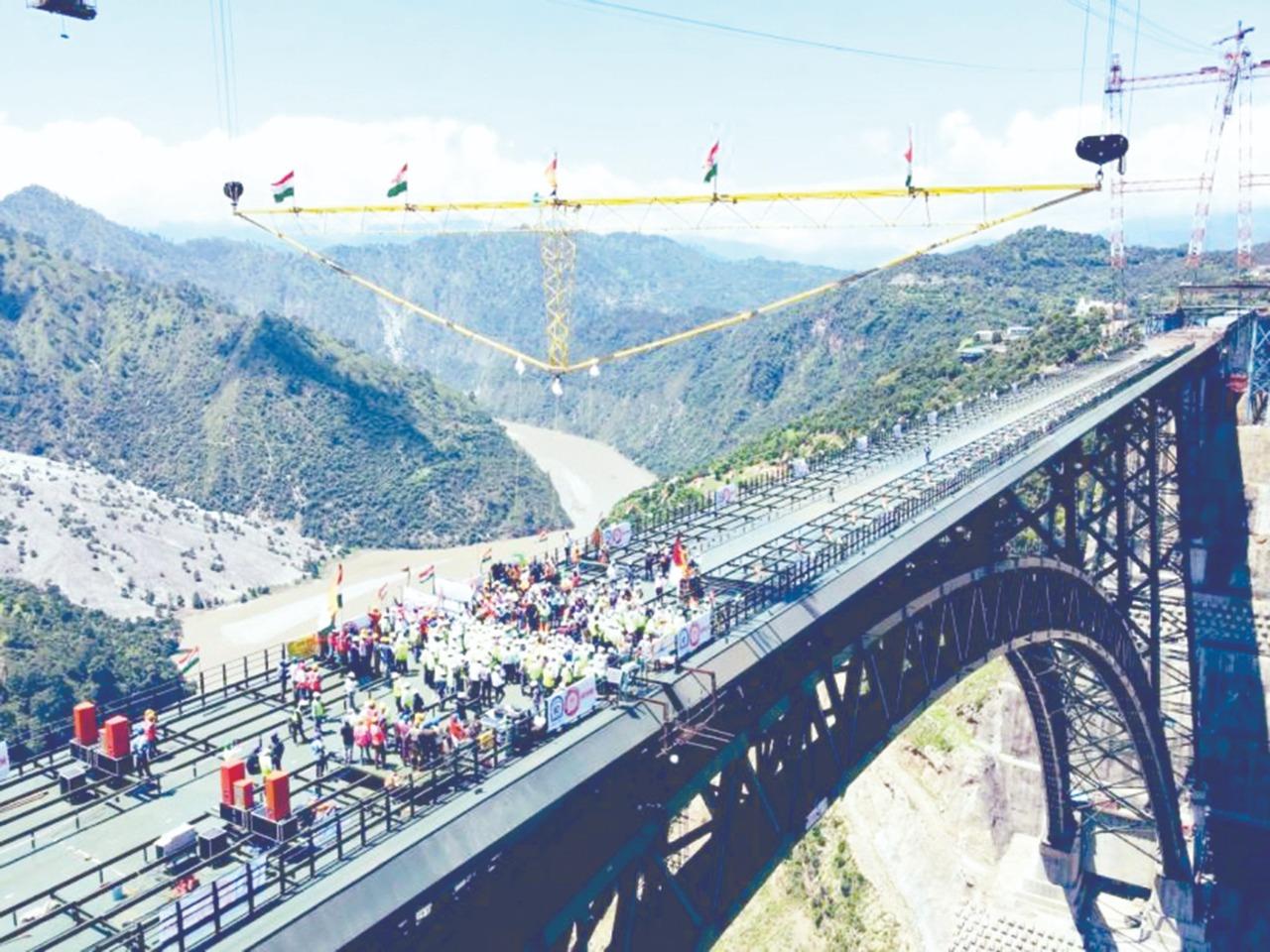
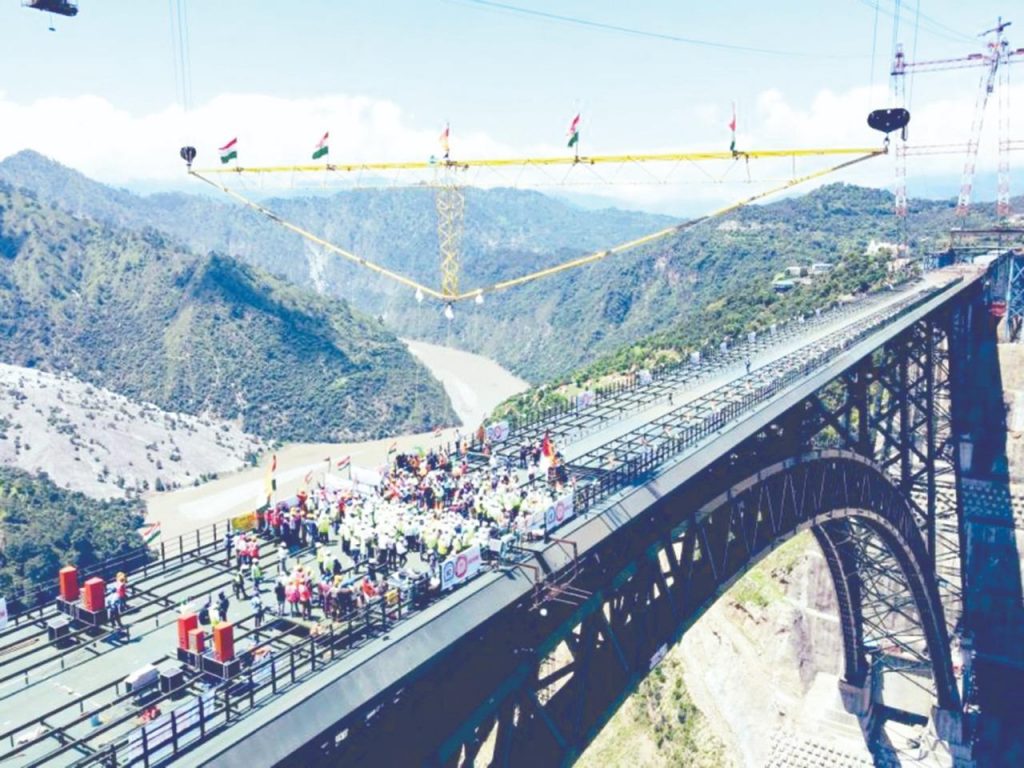
However, the most important breakthroughs, including the three longest road and rail tunnels and the world’s highest railway bridge, have already been completed. The completion of the 12.89 km long T-49, which has got the distinction of becoming the country’s longest escape tunnel, on Thursday, is a remarkable milestone in the larger political project of Kashmir’s physical integration with New Delhi and rest of India.
With the completion of the two prestigious infrastructure projects, the valley of Kashmir will, for the first time in its history, get assured 24x7x365 surface communication corridors with Jammu, New Delhi and other Indian cities, States and Union Territories.
Notwithstanding a road connecting Kashmir’s Anantnag district with Jammu’s Kishwar district through Simthan and the Mughal Road, connecting Kashmir’s Shopian district with Jammu’s Rajouri district, the Srinagar-Jammu highway continues as the only lifeline to the valley. However, it remains closed for traffic for several days and weeks during the winter every year.
The completion of the 4-lane highway, which will reduce the road distance between Srinagar and Jammu from 294 to 235 km, will come as a boon for trade, tourism and economy in Kashmir. The biggest beneficiary with the valley’s Rs 3000-crore fresh fruit industry. It will also put an end to hundreds of road accidents and deaths happening on the old highway, particularly between Banihal and Chanderkot, every year.
The completion of the rail link will come as an additional cushion to millions of the civilians, including tourists and traders, and security forces personnel travelling to and from the valley through different modes of transport. Out of the total 272 kilometres of the Udhampur-Baramulla-Srinagar Rail Link project, 161 km has been commissioned and operationalized.
Currently, most of the road accidents in J&K happen on the Srinagar-Jammu highway. According to the official figures, as many as 926 people died in such accidents on the highway in 2017, 984 in 2018, 996 in 2019, 728 in 2020 and 896 in 2021.
The worst Defence tragedy in the air route over the Pir Panjal mountain range occurred during a war with the Pakistani tribal raiders on 30 October 1947 when a Douglas C-47 Skytrain (D-3) aircraft crashed over the cliffs, causing the death of 22 soldiers and 3 pilots.
The same air route consumed another Dakota on May 8, 1957, a Packet C-119 on January 1, 1963, and an Illyushin-14 on February 18, 1964 killing 13 persons including a Major General. Its wreckage was claimed in May 1964. Another Antonov crashed near Kishtwar on March 22, 1986 killing all the 17 personnel and crew on board.
The worst civilian tragedy in Pir Panjal mountain range occurred on 7 February, 1966, when a Fokker F-27 Friendship 200, leased to Indian Airlines, crashed near the infamous Hoon Heng cliff, killing all the 37 passengers including four crew members. It was on way to Jammu from Srinagar. At the peak of winter, then State or Central governments had no resources to manage recovery of the casualties. Then civil society led by a Sopore businessman collected money and made all efforts to recover the bodies. The businessman who spearheaded the campaign had lost his son in the crash.