

“Ek Aur Birbal” – A Theatrical Tribute to Kashmiri Pandit Resilience.
A Tribute to Truth: Honoring the Vision of playwright Rakesh Roshan Bhat in Unveiling the Untold History of Kashmir and the Enduring Spirit of the Kashmiri Pandits.
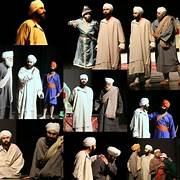
By Rahul Kilam #KilamsCorner
In an era where the theatre often serves as a mirror to society’s forgotten tales, Ek Aur
Birbal, written by Rakesh Roshan Bhat, emerges as a poignant and powerful tribute to the
indomitable spirit of the Kashmiri Pandit community. The play does more than narrate
history—it revives a legacy of resistance, courage, and identity, centered around the valiant
figure of Pandit Birbal Dhar.
Set against the grim backdrop of Afghan rule in Kashmir during the late 18th and early 19th
centuries, Ek Aur Birbal delves deep into one of the most harrowing chapters in Kashmiri
history. The story is anchored in the real-life struggle of Pandit Birbal Dhar, a nobleman and
leader of his community, who took a fearless stand against the tyranny of Afghan governors
Azim Khan and Jabbar Khan. These were times when Kashmiri Pandits faced systemic
torture, religious persecution, economic oppression, and efforts to erase their cultural and
spiritual heritage.
Bhat’s narrative skillfully brings these dark times to the stage with unflinching honesty. The
play documents how the Afghan rulers inflicted unspeakable brutality—forced
conversions, executions, and destruction of temples—on the Pandits. But it is not just a
chronicle of suffering. At its heart, Ek Aur Birbal is a story of resistance. Birbal Dhar’s daring
journey to the court of Maharaja Ranjit Singh in Lahore becomes the turning point. With
strategic brilliance and unyielding resolve, Dhar convinces the Sikh emperor to intervene
and end Afghan oppression in Kashmir.
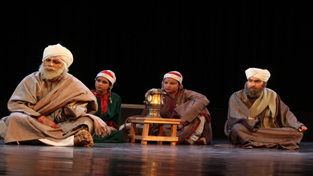
What unfolds is not just military conquest but a reclamation of dignity. With the support of
Maharaja Ranjit Singh, the Sikh forces march into Kashmir and dismantle the Afghan
stranglehold, marking a historic moment of liberation. The play climaxes in a symbolic
restoration—not only of peace but of the soul of Kashmiri culture.
Rakesh Roshan Bhat’s script is layered with emotional depth and historical detail. Through
evocative dialogue and immersive scenes, the audience is transported to a Kashmir where
resilience bloomed even in the darkest winters of despair. The character of Birbal Dhar, as
portrayed on stage, is not just a freedom fighter but a symbol of moral fortitude—‘another
Birbal’, not of wit alone but of wisdom backed by action. With masterful storytelling, he
guides the audience through the broader canvas of Kashmir’s troubled past, tracing the arc
of seven forced exoduses faced by the Pandits, and the long, painful history of how Muslim
rule first entered the Valley. This play journeys through the harrowing yet resilient history of
the Kashmiri Pandits, tracing the brutality and persecution they faced under various
rulers—from Sikander Butshikan Shahmiri to the Mughal invaders and the Afghan Durrani
invaders. It starkly brings to life the tragic destruction of the revered Martand Sun Temple, a
symbol of Kashmiri heritage and spirituality. Sikander Butshikan’s relentless campaign to
annihilate this magnificent temple, which took over a year and ended with it being set
ablaze using timber from the surrounding forests, becomes a central metaphor for the
erasure of culture and faith. The play also honors the spirit of resistance and sacrifice,
paying homage to great figures like Guru Teg Bahadur, who laid down his life defending the
Sanatan Dharma, and courageous Kashmiri Pandits such as Pandit Kripa Ram Dutt and
Pandit Shri Bhat, whose legacies continue to inspire. It is also pertinent to highlight that this
play pays tribute to the courage and leadership of Kota Rani, a remarkable figure who not
only restored Hindu rule in Kashmir but also valiantly defended the region against external
invasions. Her reign was marked by determined efforts to preserve the cultural and
civilisational integrity of Kashmir. In the end, she laid down her life in defense of her dignity.
Through powerful scenes and richly layered dialogue, the play becomes a journey—not just
into the life of one brave man, but into centuries of survival and defiance. It tells of the
cycles of loss and return, of how Kashmiri Pandits, time and again, were uprooted, only to
rise, rebuild, and reclaim their identity with quiet strength and spiritual resolve. One of the
most stirring moments in play Ek Aur Birbal unfolds during a tense exchange between
Pandit Mirza Kak Dhar and Pandit Birbal Dhar. When Mirza Kak warns that this bold step
could bring devastation not only to Birbal Dhar’s own family but to the entire Kashmiri
Pandit community, Dhar responds with quiet resolve: “Mirza Chacha, agar badlav
chahiye to kurbani deni hi padti hai.” This powerful line pierces through the silence,
gripping the audience with a mix of pride and sorrow, and standing as a solemn tribute to
the unflinching courage and sacrifices of our forefathers. Ek Aur Birbal is more than a
play—it is an act of cultural remembrance. It dares to speak of truths that have long been
brushed aside. It invites the audience not just to witness history, but to feel it—to walk with
the Pandits through the snow-covered alleys of Kashmir, to hear the chants in the temples
that were silenced, and to carry the burden of a displaced people whose only weapon was
faith. Ek Aur Birbal stands out not only for its historical relevance but for its urgent
contemporary resonance. In an age where the narratives of Kashmiri Pandits often remain
sidelined, this play reclaims space for remembrance and recognition. It reminds us that
history is not just about dates and conquests—it is about people, their pain, their pride,
and their perseverance.
Rakesh Roshan Bhat has written a script that is not just for the stage—it is for the
conscience. As the curtains fall, the applause is more than admiration—it is
acknowledgment. Of pain. Of perseverance. Of a people who were exiled again and again,
yet never stopped returning to their roots. As audiences rise to applaud, they’re not just
appreciating a well-told story—they’re honoring a community’s truth that refuses to be
silenced. Ek Aur Birbal is not just a play. It’s a movement. It’s memory. It’s justice—finally
finding its voice on stage.
In Ek Aur Birbal, history is not buried in books. It breathes, bleeds, and ultimately, heals—
under the spotlight.