

Children of a Lesser God: The Forsaken Kashmiri Pandits
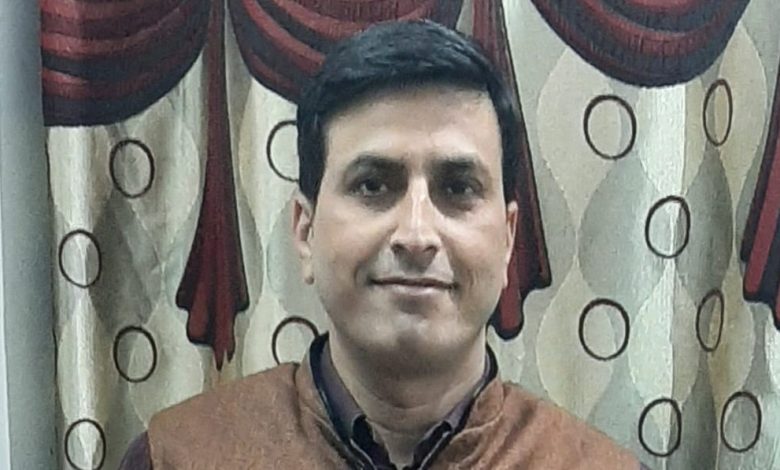
By Rahul Kilam #KilamsCorner
In 2015, in a 53-page judgment of 18 May 2015, on the petition of nearly 232 Kashmiri Pandit migrant teachers (mostly women) of Delhi State Education Department, delivered by Hon’ble Justice Rajiv Shakdher of Delhi High Court, begins with the remarkable altruism that opened with a striking lament: “The petitioners before me are children of a lesser God.” They were Kashmiri Pandits—seeking relief not just from legal systems, but from national amnesia. More than a decade later, those words remain disturbingly accurate. One of India’s oldest, most intellectually rich communities continues to live as internal refugees—displaced, ignored, and still waiting for justice.
In a recent move that underscores this neglect, the Supreme Court dismissed a petition asking for an investigation into the mass killings and rapes inflicted on Kashmiri Pandits during the insurgency of the 1980s and ’90s. The Court’s reasoning? That the plea had come “too late.” But since when does the passage of time erase the obligation to investigate gross human rights violations? In international law and Indian jurisprudence alike, mass crimes—ethnic cleansing, targeted killings, sexual violence—demand accountability. That demand doesn’t expire.
This dismissal is more than a legal decision. It is a statement. A statement that the justice system still treats some tragedies as too inconvenient to confront. A statement that some victims must simply forget, forgive, and move on—while others are allowed the dignity of memory, inquiry, and redress.
Even more ironically, this same Supreme Court, while upholding the abrogation of Article 370 in 2023, saw Hon’ble Justice Sanjay Kishan Kaul recognize the trauma of the Pandit community. In his concurring opinion, he recommended steps for structured rehabilitation. But what are words without will? What is sympathy without justice?
Let us be clear: the exodus of over 300,000 Kashmiri Pandits was not an accident of history. It was the outcome of a targeted campaign—marked by chilling slogans, assassinations, and fear. It meets every standard definition of ethnic cleansing. And yet, not one commission of inquiry. Not one conviction for the crimes of that dark decade. No truth. No justice. No closure.
What is perhaps more damning than the lack of action is the bipartisan consensus on doing nothing. From Left to Right, governments have either exploited or ignored the pain of Pandits, depending on what the moment demanded. The community has been a footnote to everyone’s politics and a priority for no one’s policy.
But the silence goes beyond the courtroom and the Parliament. It extends to civil society, academia, and the media—circles that rally around every injustice, yet too often fall quiet on this one. Why? Because the narrative doesn’t fit the scripts we’re comfortable with? Because some victims are easier to empathize with than others?
As a law student, I was taught that justice delayed is justice denied. But in the case of Kashmiri Pandits, justice hasn’t just been delayed—it has been deliberately evaded. And that evasion carries a cost—not only for them, but for the moral credibility of our institutions.
India cannot claim to be a functioning democracy while a part of its citizenry remains exiled from its own land. It cannot talk of pluralism, or G-20 leadership, while it continues to ignore one of the gravest internal displacements since Partition.
What must be done? At the very least:
A judicially monitored investigation into the targeted violence of the 1990s.
A Truth and Reconciliation Commission that centers the experiences of Pandits and formally acknowledges the scale of injustice.
A clear, time-bound, and dignified return-and-rehabilitation policy developed with community participation.
Institutional and cultural safeguards to protect their religious and linguistic heritage in Kashmir.
The Pandits’ legacy is not just their burden—it is ours. It is part of the unfinished story of Indian democracy. We must write the next chapter not with platitudes, but with principles. Because justice, if it means anything at all, must mean that no citizen of India is a child of a lesser God.