
Guru Purnima: From Darkness to Wholeness
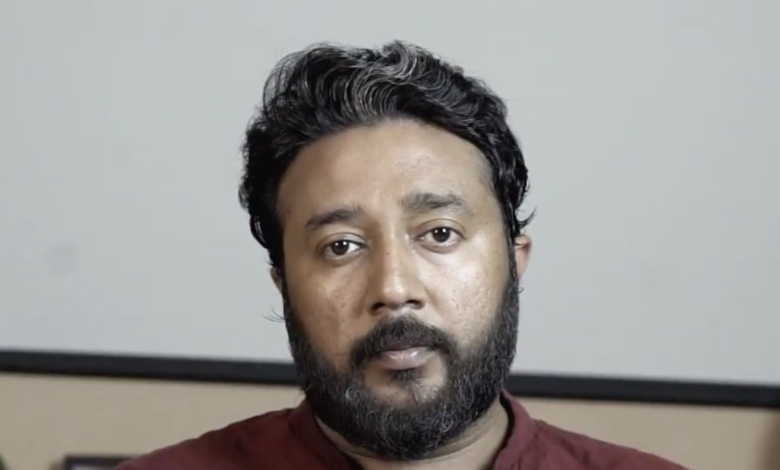
By Acharya Nilay
The full moon of Ashadha Shukla arrives every year and passes. Temples fill with crowds, queues form outside ashrams, and messages pour in from everywhere. Yet one question often remains unasked: What exactly are we celebrating? Who should be called a Guru? Who needs a Guru, and why?
If we celebrate Guru Purnima as just another festival without asking these questions, it is possible that we may be moving in precisely the opposite direction from the one that takes us closer to truth.
So, let us begin not with celebration, but with the word itself.
The Word That Becomes the Test
The word “Guru” is traditionally understood through two syllables: “Gu” and “Ru.” This meaning has been explained repeatedly in the spiritual tradition.
The Advayataraka Upanishad says:
गुशब्दस्त्वन्धकारः स्यात् रुशब्दस्तन्निरोधकः।
अन्धकारनिरोधित्वात् गुरुरित्यभिधीयते॥
Guśabdastvandhakāraḥ syāt ruśabdastannirodhakaḥ।
Andhakāranirodhitvāt gururityabhidhīyate॥
The Guru Gita expresses the same idea:
गुकारश्चान्धकारस्तु रुकारस्तन्निरोधकृत्।
अन्धकारविनाशित्वात् गुरुरित्यभिधीयते॥
Gukāraścāndhakārastu rukārastannirodhakṛt।
Andhakāravināśitvāt gururityabhidhīyate॥
“Gu” signifies darkness, while “Ru” signifies that which removes it. Therefore, the one who dispels the darkness of ignorance is called a Guru.
Look carefully at this definition. It does not define a person. It defines a function.
A Guru is not a position, a title, or an appearance. A Guru is an occurrence. And the evidence of a Guru is not found in the Guru, but within the disciple: Is the darkness within you diminishing in their presence?
Tradition has very intelligently placed the test in the hands of the disciple, not the Guru.
Why Purnima?
Purnima represents the full moon, the moon in its complete form. But there is something worth remembering about the moon: it has no light of its own. It reflects the light of the sun, and it does so with such clarity that the darkness of night becomes visible.
A true Guru does the same. The light is not his own. He simply allows it to reach you without distortion and without stamping his own name upon it.
Then there is Purnata, wholeness, what the Upanishads call Brahman:
पूर्णमदः पूर्णमिदम्।
Pūrṇamadaḥ pūrṇamidam.
“That is whole. This is whole.”
Guru Purnima, then, becomes a remembrance of that wholeness which reveals itself when darkness disappears.
The occasion is also known as Vyasa Purnima. It is no coincidence that tradition regards Ved Vyasa as the Adi Guru. His work was centred on organising and dividing knowledge so that it could become accessible. The first Guru celebrated by the tradition is one who shared knowledge rather than confined it.
The Discourse of Silence
There is a story that perhaps offers one of the deepest descriptions of a Guru.
Four great sages, Sanaka, Sanandana, Sanatana, and Sanatkumara, approached Dakshinamurti in search of Brahma Jnana. Dakshinamurti offered no discourse. He opened no scripture and presented no argument.
He simply sat in silence.
After some time, the doubts of the sages dissolved on their own.
A meditation verse traditionally recited alongside the Dakshinamurti Stotram captures this scene beautifully:
चित्रं वटतरोर्मूले वृद्धाः शिष्या गुरुर्युवा।
गुरोस्तु मौनं व्याख्यानं शिष्यास्तु छिन्नसंशयाः॥
Chitraṁ vaṭatarormūle vṛddhāḥ śiṣyā gururyuvā।
Gurostu maunaṁ vyākhyānaṁ śiṣyāstu chinnasaṁśayāḥ॥
What a remarkable sight: beneath the banyan tree, the disciples are old and the Guru is young. The Guru’s discourse is silence, and the doubts of the disciples have been severed.
The message is clear. When the mind becomes completely silent, truth does not reveal itself through words, but through direct experience.
A Guru is not merely someone who speaks. Sometimes, a Guru is that presence before whom your own inner noise becomes silent.
Presence means awareness.
The one who awakens you is the Guru.
Buddha’s Answer
Towards the end of Buddha’s life, while staying in the village of Beluva, he became seriously ill. Ananda was deeply concerned. Who would guide the Sangha after Buddha was gone?
Buddha’s response is preserved in the Mahaparinibbana Sutta:
Attadīpā viharatha, attasaraṇā anaññasaraṇā.
“Dwell as your own light, your own refuge, with no other refuge.”
In India, the essence of this teaching is popularly remembered as:
अप्प दीपो भव।
Appa Dīpo Bhava.
“Be your own light.”
The Pali word dīpa can carry two meanings: a lamp and an island. Some scholars interpret the teaching as “be an island unto yourself,” suggesting that amid the flood, one must discover solid ground within oneself. Yet both readings point towards the same insight: do not search outside yourself for the ultimate refuge.
Consider how extraordinary this response is.
These words did not come from an opponent of Gurus. They came from someone whom thousands regarded as their Guru, spoken as he approached death, a moment when demanding dependence would have been easiest.
The greatest Guru is perhaps the one who, before leaving, returns you to yourself.
Kabir points towards the same understanding in his famous couplet:
गुरु गोविंद दोऊ खड़े, काके लागूँ पाँय।
बलिहारी गुरु आपने, गोविंद दियो बताय॥
Guru Govind dou khaḍe, kāke lāgū̃ pā̃y।
Balihārī Guru āpane, Govind diyo batāy॥
The couplet is often read purely as an expression of devotion. But look at why the Guru is revered: because the Guru revealed Govind.
Having shown the way, the Guru steps aside.
The Guru is not the destination. The Guru is the pointer.
Zen tradition expresses the same idea through a simple image. A teacher points towards the moon and says, “Look.” The disciples begin looking at the finger.
The teacher laughs.
The finger is not the moon.
The Irony of Our Times
Now look at the present.
Many people carry the title of Guru today. But how many truly meet its definition?
A large part of what passes for spirituality today has become a business of dependence. People are made dependent, bound by fear, and discouraged from questioning. Offerings are demanded. Instead of removing darkness, superstition and misconceptions are allowed to deepen.
Where questioning becomes an offence, knowledge cannot flourish. What grows instead is disciplined ignorance.
The original spirit of Dakshina was gratitude, something offered voluntarily. But when Dakshina becomes a demand, the story of Dronacharya and Ekalavya offers perhaps the strongest example of what such a demand can become.
That story has reached us as a warning, not as an ideal.
So how does one recognise a Guru?
Three questions may be enough.
First: In this person’s presence, are my questions growing, or am I simply being handed answers?
Second: Am I becoming more independent, or more dependent?
Third: Am I being given fear, or fearlessness?
The one who constantly calls you towards himself may not be a Guru.
The one who leads you back to yourself is.
Guru Purnima is as much a celebration of the Guru as it is an examination of the disciple’s readiness. The one who lights the lamp is important, but equally important are the eyes capable of recognising the light.
Our society needs true Gurus today. But perhaps it needs something even more urgently: disciples who know how to question.
This Guru Purnima, bow to the finger.
But look at the moon.
About the Author
Acharya Nilay (Nilayankur Bharti) is a practical spirituality teacher and speaker who guides individuals through self inquiry and reflection on their own lived experiences. His approach encourages people to become more aware and recognise their true nature through questioning and direct understanding.