
J&K’s situation improved, stone-pelters become ‘panch’, ‘sarpanch’, says Shah
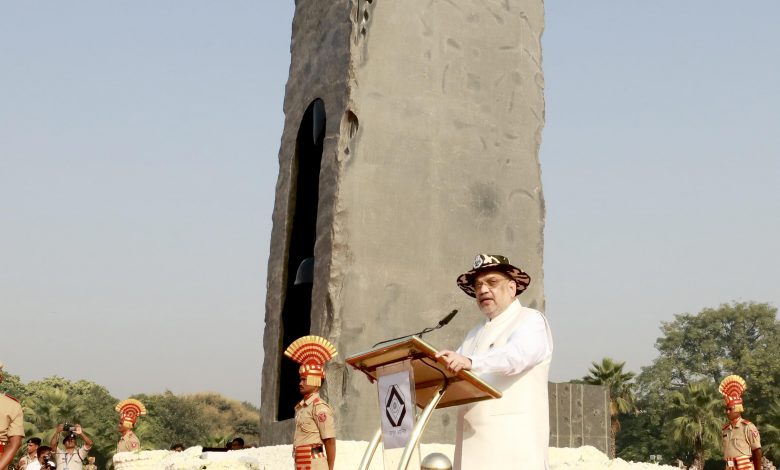
Union Home Minister Amit Shah Friday said the situation in Jammu and Kashmir has improved and the youths, who used to pelt stones at security personnel earlier, have now become ‘panch’ and ‘sarpanch’, and are participating in the development of the region in a democratic manner.
Shah, while addressing all the chiefs of forces and paramilitary commanders at the National Police Memorial in the Chanakyapuri on the occasion of the National Police Commemoration Day, also said the security situation in the insurgency-hit areas of the northeast and Jammu and Kashmir as well as in the states affected by Naxal violence has improved over the last eight years of the Narendra Modi government.
“There has been a positive change in the internal security of the country in the last few years. In the northeast, we have removed the special powers given to the armed forces (under the AFSPA) and instead, given special powers to the youngsters there, resulting in a decline of violence in these areas by more than 70 percent,” he said.
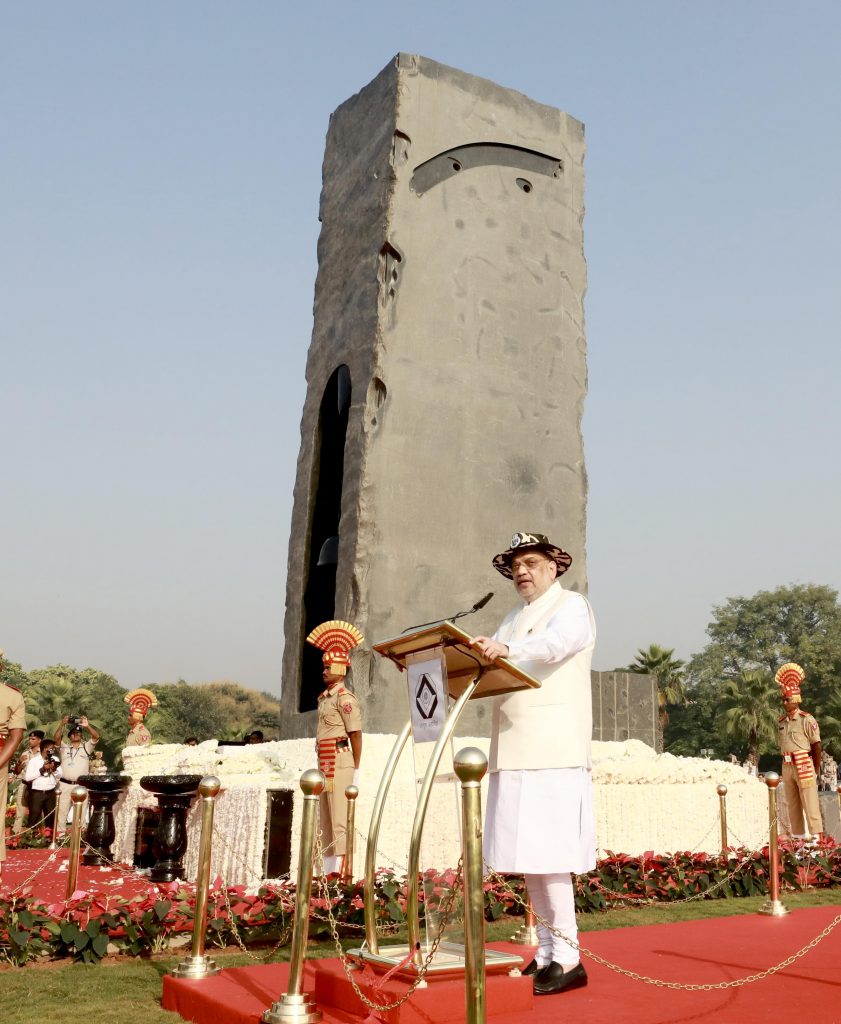
Shah added, “Today, I am satisfied that most of the hotspots in the country have been found to be almost free from anti-national activities. In the states affected by Left Wing Extremism (LWE), the national anthem is being sung in Eklavya schools while the national flag flutters on these buildings. India is proceeding on the path of development due to the sacrifices made by the police and paramilitary personnel across the country.”
Paying his tributes to these personnel, Shah said over 35,000 police and Central Armed Police Force (CAPF) personnel have given supreme sacrifice in the line of duty while protecting the country. “The country is progressing in every sector in the present time. After 75 years of independence, we can say that we are definitely moving ahead towards our destination with strong willpower and speed. But at the foundation of all these achievements our country is achieving today is the supreme sacrifice of our soldiers,” he said.
“The Narendra Modi government is committed to the welfare of these personnel and the Home Ministry has taken proactive steps and achieved definite results in three areas of ensuring better health care, enhancing housing satisfaction and humanising the duty roster of the Central Armed Police Forces (CAPF) troops,” Shah said.
He said the housing satisfaction for CAPF jawans has increased from 37 percent in 2014 to 48 percent now and the government aims to take it to 60 percent over the next few years. “The MHA has distributed about 35 lakh cards under the central health care scheme Ayushman Bharat to the CAPF troops and their families and has reimbursed funds to the tune of Rs.20 crore till now to them,” he said.
Shah said all personnel also played a leading role during the Covid-19 pandemic. He added, “Our police personnel had been on the front during the Covid-19 pandemic helping people to reach hospitals, organising last rights of those who died of the illness and maintaining lockdown rules.”
The National Police Commemoration Day is observed in the memory of 10 Central Reserve Police Force (CRPF) personnel who were killed on this day in 1959 in an ambush by the Chinese troops in Ladakh’s Hot Spring area.
He also said terrorism is the biggest violator of human rights as he urged Interpol and its member countries to join hands for cross-border cooperation so that cross-border terrorism can be defeated.
Addressing the 90th Interpol General Assembly on its concluding day here, Shah said criminal syndicates are working in a nexus and hence, global police and intelligence agencies should work together.
“Terrorism is the biggest violator of human rights…. The narrative of good terrorism and bad terrorism, small terrorism and big terrorism cannot go together,” he said, addressing the delegates from 164 countries.
The Interpol general assembly is being organised in New Delhi to coincide with the 75th anniversary year of India’s independence.
Shah said the current crime incidents are “borderless” and all the Interpol member countries will have to rise to meet this challenge and the global police organisation’s role in tackling these issues is “very important.”
Cross-border cooperation is of utmost importance in checking cross-border terrorism, the home minister added.
Narratives of good terrorism and bad terrorism, small terrorism and big terrorism cannot go together, he said.
Talking about online radicalisation, Shah said this cannot be termed a political problem as in that case, the battle against it will be half-hearted.
He said the Narendra Modi government is trying its best to make police forces capable of dealing with all kinds of challenges.
Shah said India is preparing a national database on terrorism and narcotics so that police agencies can use information effectively.
He also said citizens’ security is the first priority of any police force.